
Controllability - Standing
In April 2007 MCS Servo made a site visit to evaluate the performance of two models of the D671 servovalves (1GPM vs. 2.5 GPM models.)
Though the 2.5GPM model responded faster than the 1GPM, the latter was far easier to control under pulse perturbations. It was felt that the ease of controllability outweighed the marginal improvement in risetime offered by the 2.5GPM servovalve. In conclusion, the D681 servovalves were replaced with the D671-3001 (1GPM) units.
The following figures illustrate the test results. Each servovalve was tested on the same actuator.
1GPM Servovalve (D671-3001)
Controller parameters used: Proportional + feed forward velocity control + directional-dependent gain.
1° pulse (Amplitude goal = 175 mV; ideal pulse height)
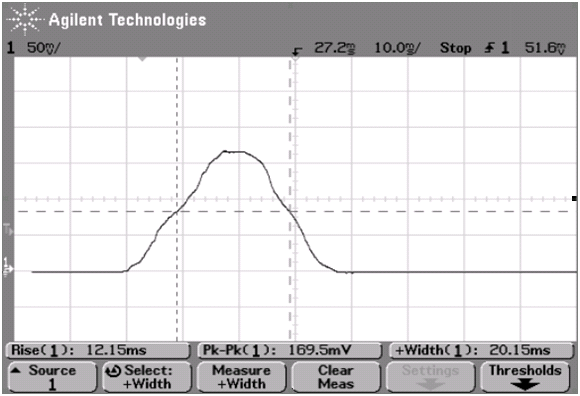
2° pulse (Amplitude goal = 350 mV)
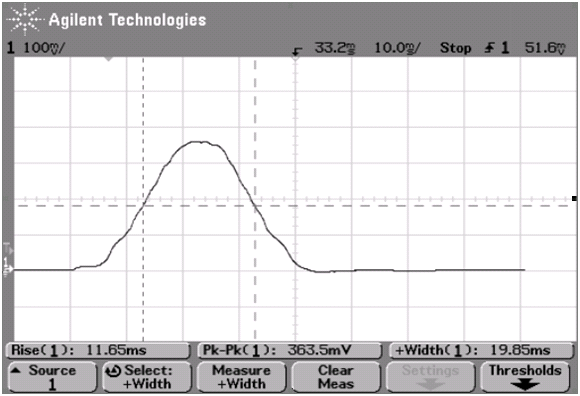
2° pulse with 100kg person standing on apparatus
(Amplitude goal = 350 mV)
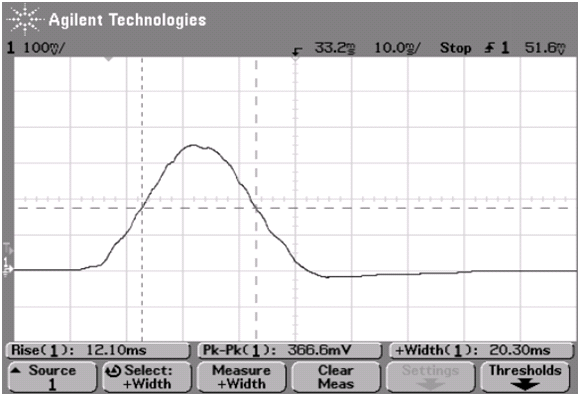
4° pulse (Amplitude goal = 700 mV)
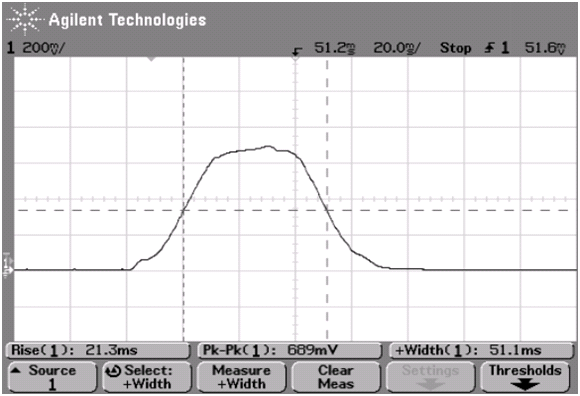
8° pulse (Amplitude goal = 1400 mV)
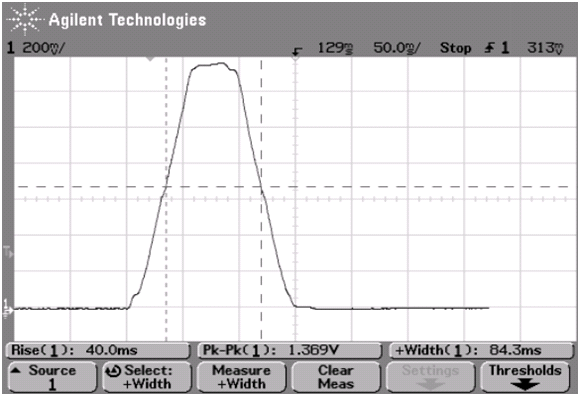
2.5GPM Servovalve (D671-3002)
Controller parameters used: Proportional + feed forward velocity control + directional-dependent gain. Contorller was re-tuned for this servovalve.
1° pulse (Amplitude goal = 175 mV)
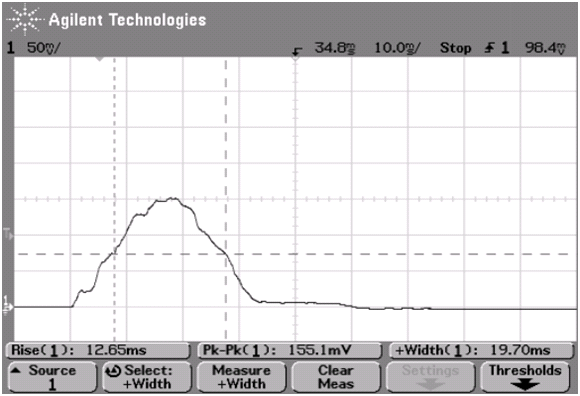
1° pulse with 100kg person standing on apparatus
(Amplitude goal = 175 mV)
Controller re-tuned with different parameters than for 1-deg unloaded pedal.
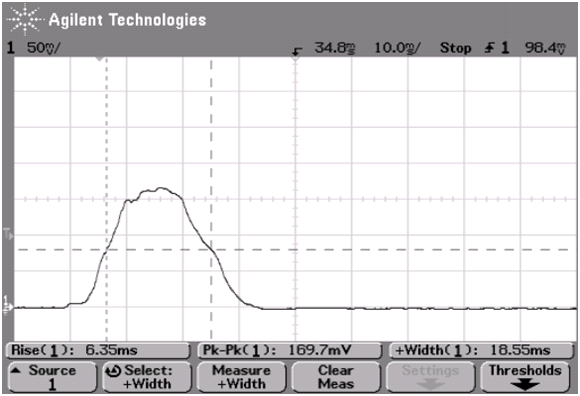
2° pulse (Amplitude goal = 350 mV)
Controller re-tuned, again.
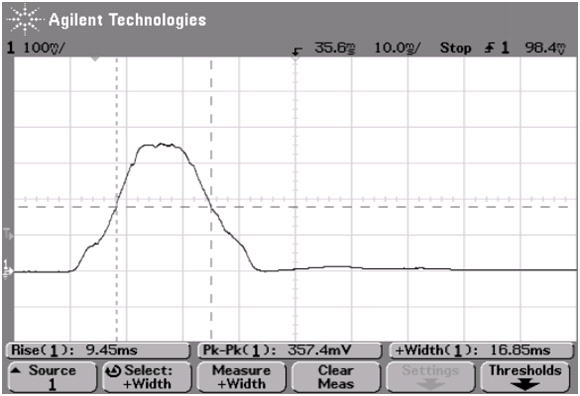
2° pulse with 100kg person standing on apparatus
(Amplitude goal = 350 mV)
Controller re-tuend, again.
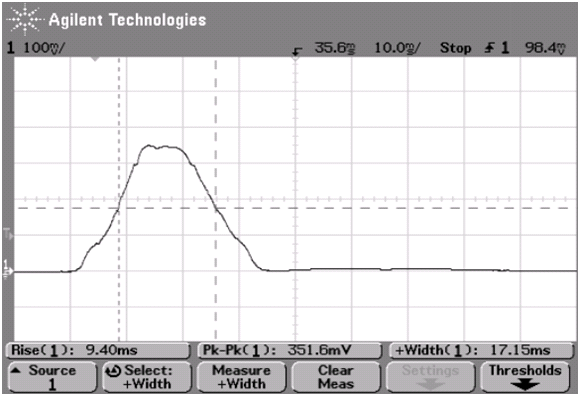
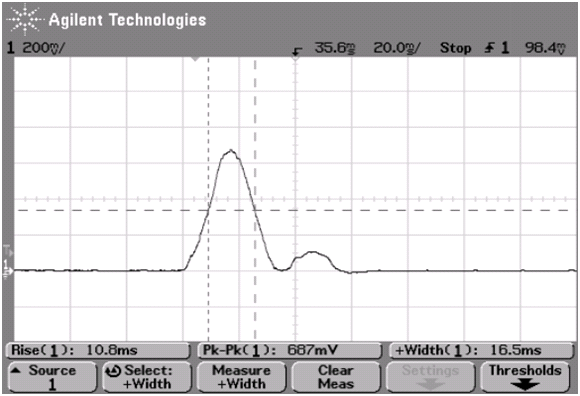
4° pulse (Amplitude goal = 700 mV)
Controller re-tuend, again. Small bump in response could not be eliminated.
Last modified: 2007-04-24 Ross Wagner